Music
NFTs
On ownership, royalties, and how a token can give the master back to the artist.
Hey — thanks for coming to my cozy corner of the internet.
I'm Daniel, a computer engineer from Spain. I want to emphasize engineer — the word comes from ingeniare: to contrive, to devise.
That's what I do — I solve problems by building things. A few years ago I discovered NFTs and joined the OBEY team, building an on-chain project with Shepard Fairey.
That work is how I ended up here, talking about music.
Five words. Every slide uses them.
A public ledger replicated across thousands of computers. Nobody can edit your entry — not even the people who built it.
Your account on the blockchain. A public address (your "username") plus a private key (your password). You own it — no bank, no platform.
The small fee paid to the network to process a transaction. On Ethereum, typically $1–$50 depending on traffic. Paid once at mint.
The act of creating a token — writing your entry into the ledger for the first time. Like pressing a vinyl: once it exists, it exists forever.
A program that lives on the blockchain and runs automatically when triggered. Like a will that executes itself — no lawyer, no delay.
The Royalty
Problem
That's the headline rate before the splits start. One million streams generates roughly $3,000 to $5,000 in gross royalties on the recording side — then the platform, the publisher, the label, and the distributor each take a slice.
A track must reach at least 1,000 streams in the previous 12 months to generate any recording royalties at all. Below the line, the song earns $0 — the money is redistributed to tracks above it.
Where each dollar of streaming revenue actually goes.
A composite of public industry figures — Music Business Journal (Berklee), Variety's CRB reporting, and Curve Royalty Systems' breakdown of the flow.
Distributor takes 10–25%. Then the label. A signed major-label artist's share is typically 13–20% of what's left. Math it out: on $0.004 per stream, a signed artist sees roughly $0.0003–$0.0005.
per stream
~$0.0003
The math doesn't math.
To take home a Spanish minimum wage (~€1,200/month) an artist needs roughly:
"In the 10 years I've been making music — six albums, and you combine all those advances — what I did in one drop last year in NFTs, I made more money."
What is an NFT,
really?
A token is just
a row in a spreadsheet
that you control.
The spreadsheet is public. The row says "this address owns this thing". Nobody else can edit your row. That's it.
Three flavors of token.
All three live on the same chain. The only difference is what kind of thing they represent.
Fungible
Every token is interchangeable with every other. Like a euro: any euro buys the same coffee.
Unique
Each token has its own ID and history. Two ERC-721s are never the same row.
Semi-fungible
A single contract can mint 500 identical seats and one unique backstage pass — in one transaction.
A track can be three things at once.
One-of-one ownership
Sold once. The buyer holds the equivalent of a vinyl test press. ERC-721.
Limited-run copies
A run of 100 or 1000. Each buyer gets a numbered seat. ERC-1155.
A right to a moment
Backstage pass, gig entry, presale access. Burnable. ERC-1155.
The contract
is the agreement.
No PDF. No lawyer chasing a label. The split is code, and the code is public. Every time the token changes hands, the code runs.
Think of it as a will that executes itself — no estate lawyer, no delay, no one who can rewrite the terms after the fact.
One mint. Royalties forever.
Every future sale flows a slice back to the wallet that minted. The middle is replaced by maths.
A token can hand
the master back to
the artist —
and the middle can finally
disappear.
The First
Wave
Five years from curiosity to infrastructure.
CryptoKitties proves it
First NFT with mass appeal. Clogs Ethereum. People realize you can own a digital thing.
First music drops
RAC, 3LAU and others start experimenting. Early platforms appear: Catalog, Mintsongs.
NFT summer
Beeple sells for $69M. Music NFT volume hits $86M in twelve months. The infrastructure is built.
Snoop buys Death Row
Reissues the catalog as NFTs. The first major-label artist to actually do it.
WVRP & AI stems
Same year, different angle. AI-generated music + buyer-owned IP. The contract is the license. The label is optional.
Snoop bought a label.
And dropped it
on chain.
In February 2022 Snoop Dogg acquired Death Row Records and announced a plan most people thought was a stunt: reissue the entire catalog as NFTs. He pulled it from streamers. Released B.O.D.R. as Galactic Boxes — each one an NFT.
Where music lives on-chain — then and now.
The first wave of music-native platforms mostly closed. General marketplaces and new infrastructure survived.
Sound.xyz
Jan 2026Curated drops, numbered editions with fan comments at mint. Closed after 3.5 years — collections remain on-chain.
Why: NFT volume collapsed ~95% from 2021 peak; curated-drop model required sustained buyer demand that evaporated.
Catalog
Inactive1-of-1 record drops, auction-based. The vinyl-collector mindset ported on-chain. Tom Misch, Daedelus.
Why: Secondary market liquidity dried up in the 2022–23 downturn; 1/1 auctions need active collectors to function.
Royal
ClosedFractional royalty ownership. Closed its investing platform — legacy holders still claim at lda.royal.io.
Why: Fractional royalty tokens risked securities classification; regulatory uncertainty + low volume made the model unworkable.
Audius
SolanaDecentralized streaming. 7.5M+ monthly users. Artists paid directly in $AUDIO.
OpenSea
MultichainWorld's largest NFT marketplace with a dedicated music section. Ethereum, Solana, Polygon and more.
BitSong
CosmosMusic-only blockchain built on Cosmos SDK. Near-zero gas fees, fast transactions, built for artists.
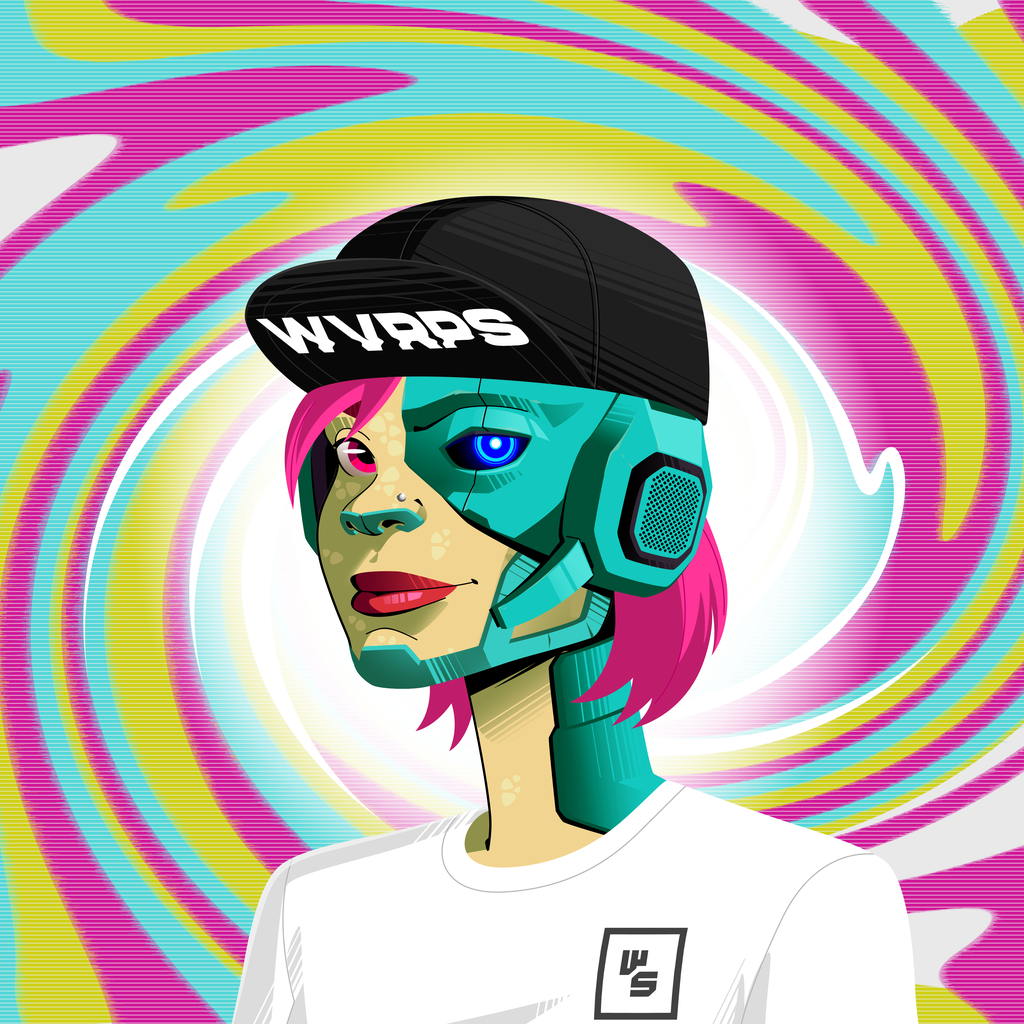
WVRP Sound:
AI stems & the
IP you can use.
A small label minting AI-generated tracks where the buyer gets the commercial IP rights. Sync it. Remix it. Sell it on. The contract says yes — and the stems come with the token.
The Royalty
Wars
On-chain royalties only work
if marketplaces choose
to respect them.
The contract specifies a 10% royalty. But the marketplace executing the trade decides whether to actually call that function. For two years, OpenSea did. Then Blur showed up.
A two-year fight, in three moves.
Blur launches
Zero platform fees. Royalties default to 0%. Traders flock. Volume eats OpenSea in a quarter.
OpenSea blinks
Drops creator fees to "optional". Adds a creator-fee tool nobody uses. Artists lose ~$200M over the next twelve months.
The fight back
Creators block Blur at the contract level. New standards (ERC-2981, Operator Filters) bake royalty enforcement into mint. Music platforms quietly opt out of marketplaces that don't comply.
The technology promised automatic royalties. The reality is that automatic only works inside a contract that can't be opted out of — and the industry is still figuring out where that line goes.
It depends on where the royalty lives.
ERC-2981 is a signal, not a lock. The contract announces "10% royalty" but the marketplace decides whether to pay it. Blur read the signal and ignored it. OpenSea's blocklist (Operator Filter) was bypassed by Blur using OpenSea's own Seaport protocol — which OpenSea couldn't block without blocking itself.
→ A "no parking" sign. Blur read it and drove through.
If royalties are enforced inside the transfer function, the chain rejects the transaction entirely if the operator isn't whitelisted. No marketplace can bypass this — the trade simply fails. The only workaround is a direct peer-to-peer transfer off-marketplace, which kills liquidity.
→ A physical bollard. No one drives through it — the chain just refuses.
The takeaway: mint on a platform that uses contract-level enforcement, and no marketplace can opt out of paying you.
The Artist's
Playbook
The first 100 fans
skip the queue.
Forever.
The token you bought in 2026 doesn't go away. When the artist plays Wembley in 2031, the contract knows who held it from day one.
Presale access. Skip the line. Backstage on the third night. A copy of the unreleased B-side. None of this requires the artist to maintain a fan list — the chain is the fan list.
Holds token #1–100 → gets a wallet-gated link to presale. No email. No password. No bot scalper.
The ticket
becomes the
receipt.
ERC-1155 means a tour can mint a thousand tickets in a single contract. Each one is burnable at the door and keeps a stub forever.
Royalties that
outlive the label,
the platform,
the trend.
Twenty years from now, if a fan rediscovers your track and resells the token, the original artist still gets a cut. That has never been true before in the history of recorded music.